"You Don't Have a Lead Problem. You Have a Follow-Up Problem." — Why Service Businesses Are Leaving Tens of Thousands on the Table
The data is in. The leads aren't the issue. Here's what's actually killing your close rate — and your Google LSA ranking.
Chris Russo
Author
May 15, 2026
Published
The data is in. The leads aren't the issue. Here's what's actually killing your close rate — and your Google LSA ranking.
It's a Wednesday afternoon. The van is on a job. The phone rings. Nobody answers. The caller hangs up and never calls back. That call was worth somewhere between $300 and $10,000 depending on what they needed. Multiply that by 5 days a week, 52 weeks a year.
According to Invoca's 2024 platform analysis of home services businesses, 27% of all inbound calls go unanswered. On weekends, that number climbs to 41%. And here is the part that should keep every business owner up at night: research from CallRail's 2025 From Conversations to Conversions report found that up to 85% of callers who reach voicemail will never call back. Less than 3% leave a message (Invoca, 2024).
The leads aren't bad. They never were. What's broken is what happens — or doesn't happen — in the 60 seconds after the phone rings.
The 60-Second Window That Decides Everything
A landmark study conducted by researchers at MIT's Sloan School of Management in partnership with InsideSales.com (the MIT Lead Response Management Study, 2007), analyzing over 15,000 web-generated leads across multiple companies, found that the odds of contacting a lead drop by 100 times when responding in 30 minutes vs. 5 minutes. The odds of qualifying that lead drop 21 times.
Harvard Business Review published the expanded version of this research in March 2011 ("The Short Life of Online Sales Leads," Oldroyd, McElheran & Elkington), analyzing 1.25 million sales leads across 29 B2C and 13 B2B companies. Their finding: "Firms that tried to contact potential customers within an hour of receiving a query were nearly seven times as likely to qualify the lead as those that tried to contact the customer even an hour later — and more than 60 times as likely as companies that waited 24 hours or longer." (Harvard Business Review, 2011)
The average response time across businesses? 42 to 47 hours (HubSpot / Drift research). That is two full business days. Meanwhile, homeowners dealing with a broken AC unit in July, a burst pipe, or a roof leak after a storm are not waiting 42 hours. They are calling the next contractor on the list within minutes.
Mike Blumenthal, co-founder of Near Media and one of the most-cited local search researchers in the country, put it plainly in a 2024 interview: "In local service businesses, 35 to 50% of sales go to the first responder. Customers in an emergency don't wait. They call the next person on the list within two to three minutes if they don't reach you."
What a Missed Call Actually Costs You
- HVAC: The average HVAC repair revenue per job climbed to $1,205 in 2025, up from $750 just four years earlier (Housecall Pro, 2026 HVAC Industry Trends Report). Full system replacements run $5,000 to $15,000, with high-efficiency installs reaching $20,000+.
- Plumbing: The average emergency plumbing call generates $450 to $600. Non-branded Google Ads plumbing leads now cost an average of $183 each (SearchLight Digital, Q1 2026 benchmark). If you're paying $183 to generate a lead and then not answering the phone, you just paid $183 for nothing.
- Roofing: The average full roof replacement in the U.S. is $9,544 (Angi, 2026). Per research cited by ServiceTitan, 97% of roofing customers expect a callback within a week, and 54% expect one within two days. Most roofing contractors do not have a system that guarantees that.
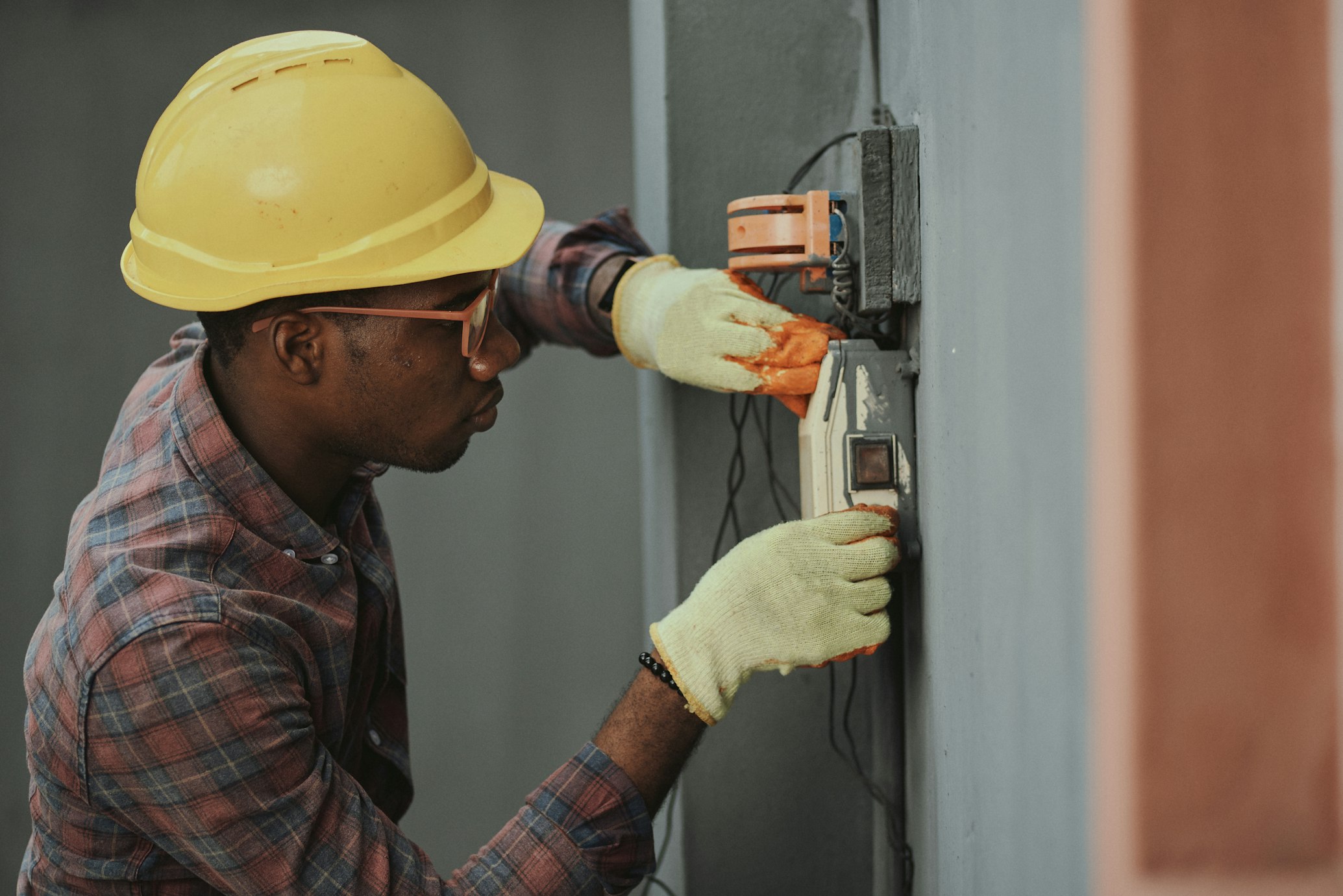
- Electrical: Residential electrical tickets range from a few hundred dollars for a panel diagnosis to several thousand for a rewire or panel upgrade. The pattern is the same across all four trades: the phone call is the most valuable moment in the sales process, and it is also the most frequently abandoned one.
If an HVAC business misses 5 calls a week and even one of those callers had a repair need (not even a replacement), that is roughly $6,000 in missed repair revenue per month at the $1,205 average ticket. In a year, that is over $72,000 in revenue that rang the phone and walked out the door because no one answered.
Google LSA Is Punishing You For Every Call You Miss — And You Don't Even Know It
Google's own documentation on LSA ad rankings states: "Missed calls may negatively affect your responsiveness." and that average response time is a direct factor in profile quality scoring which influences both ad rank and cost per lead (Google Local Services Help, "About Ad Rankings," 2024).
Every call placed through Google LSA is routed through Google's own phone number. Google knows whether you answered. Google knows whether it went to voicemail. Calling back later does not repair the ranking signal — Google has already logged the miss.
Per analysis by digital marketing firm Boomcycle (2026 LSA ranking factors update) and Digital Harvest agency research, missed calls and slow replies are among the most heavily weighted negative signals in LSA's ranking algorithm as of 2025–2026. In their words: "Responsiveness signals: Missed calls or slow replies now more directly impact visibility, as Google deems these profiles 'less reliable.'" (Wizard of Ads, 2026 Google LSA Changes analysis)
This creates a compounding problem: the more calls you miss, the lower your LSA rank drops. The lower your rank drops, the fewer calls you get. The fewer calls you get, the less revenue you generate from a channel you are already paying for.
LSA cost per lead by trade (2024–2026 aggregated data from Home Service Direct, Media Captain, and 99 Calls): HVAC averages $45–$85/lead, plumbing $40–$75, electrical $35–$70, roofing $50–$95. At those prices, every unanswered call is not just a missed job — it is a paid-for lead you threw away.
The Real Problem: Most Service Businesses Are Built to Lose Leads
The typical service business calls a new lead once, maybe twice, then moves on. The data says this is catastrophically early to give up: 80% of sales require 5 or more follow-up contacts, yet 44% of salespeople give up after just one attempt (Invesp / Brevet research). In the trades, the pattern is even more pronounced — most businesses don't have salespeople at all. The tech is expected to close the job on the first call or not at all.
Per multiple compiled sales studies, only 2% of sales happen on the first contact. 80% happen between the 5th and 12th touch (Marketing Donut). A customer who didn't book after the first call is not a dead lead — they are a not-yet-followed-up lead.
Text messaging is dramatically underused in the trades for follow-up. SMS messages have an open rate of approximately 98%, with 90–95% read within 3 minutes of receipt (Sender, 2026; Kixie). Compare that to email's average open rate of ~20–26%. A text follow-up after a missed call takes 30 seconds to send and converts dramatically better than another voicemail.
After-hours is an afterthought for most service businesses. Research from Salesforce indicates 34% of inbound service calls happen outside 8 am–5 pm. CallJolt's analysis of home services businesses puts the after-hours and weekend volume at 55% of total calls when evenings are included. The hours when your office is closed are, statistically, nearly as busy as the hours when it is open.
You Already Have More Business Than You Think — You've Just Stopped Talking to It
Acquiring a new customer costs five to 25 times more than retaining an existing one, depending on the industry (Harvard Business Review, Amy Gallo, "The Value of Keeping the Right Customers," 2014).
The foundational research on this point was published in 1990 by Frederick Reichheld and W. Earl Sasser Jr. in Harvard Business Review ("Zero Defections: Quality Comes to Services"). Their finding: reducing customer defection by just 5 percentage points generated 85% more profits in one bank branch system, 50% more in an insurance brokerage, and 30% more in an auto-service chain. The auto-service chain result is directly applicable to the trades.
The probability of selling to an existing customer is 60–70%. The probability of selling to a new prospect is 5–20% (Marketing Metrics, cited by HBR and Invesp).
The typical home service business runs approximately 30% repeat customers and 70% new customers. The top-performing home service businesses run the inverse: 70% repeat, 30% new (ZyraTalk industry analysis). That is not an accident. That is a follow-up system.
ServiceTitan's 2026 Residential State of the Trades Report — a survey of over 1,000 residential contractors — found that 53% of contractors say they plan to prioritize existing customers over new acquisition. The intent is there. The system usually is not.
According to retention research published by CallJolt (2026 Home Service Customer Retention Benchmarks), only 19% of home service customers who don't return do so because of dissatisfaction. The top two reasons for not coming back are: they forgot the contractor's name or number (29%), and they found a different contractor more easily when the need arose (23%). That is a 52% customer loss rate driven entirely by communication failure, not service failure. You did the job right. You just disappeared afterward.
Most service businesses are not losing customers. They are losing touch with them. There is a difference. And the fix is not another ad campaign — it is a system.
The Shift That's Already Happening — And Why Speed Now Beats Budget
A September 2024 survey by Housecall Pro of over 400 home service professionals found that 42% had used AI tools in the past year, and 25% of those reported the tools directly increased their revenue and job volume (Housecall Pro, 2024).
The U.S. Chamber of Commerce's Empowering Small Business report (August 2025) found that 58% of small businesses now use generative AI — up from 40% in 2024 and more than double the adoption rate in 2023.
Despite this, ServiceTitan's 2026 Residential State of the Trades Report found that only 25% of contractors use AI meaningfully, while nearly 50% report having little to no trust in AI capabilities.
The window to be an early mover in AI-assisted follow-up, after-hours call handling, and automated nurture is still open — but not for long. Right now, the contractor who answers every call, texts back within 60 seconds, and follows up 5 times without lifting a finger is winning jobs that are being paid for by businesses with better marketing budgets but slower phones.
What a System Actually Looks Like
- Every call gets answered, every time — including nights, weekends, and peak-season days when the whole crew is on jobs. An inbound voice agent that can answer, capture the name, address, service type, and schedule a call-back or appointment is not a futuristic concept. It is table stakes in 2026.
- Missed calls trigger an immediate text — within 60 seconds, not 60 minutes. The message acknowledges the missed call, provides a way to respond, and gives the caller a reason to stay engaged rather than move on. SMS open rates of 98% mean this message gets read almost every time.
- Web form and email inquiries get a response in under 5 minutes — automated, personal-sounding, and with a next step. Not a generic "thank you for your inquiry" autoresponder. A message that sounds like a human wrote it.
- A follow-up sequence runs automatically for every unclosed lead — minimum 5 touches across text, email, and voicemail drop over 7 to 14 days. Not aggressive. Not spammy. Persistent, professional, and systematic.
- The existing customer database gets regular contact — seasonal reminders (AC tune-ups before summer, furnace checks before winter, roof inspections after storm season), birthday messages, service anniversary check-ins, referral asks. This is not marketing. This is maintenance of a relationship the business already paid to build.
Most service business owners already know their follow-up is not perfect. The problem is not awareness — it is bandwidth. When you are running a crew, managing jobs, dealing with suppliers, and trying to quote the next project, a lead that did not book on the first call gets pushed to the back of the list. That is human. That is understandable.
But the math does not care about bandwidth. A 27% missed-call rate (Invoca, 2024) costs a mid-size HVAC business somewhere between $250,000 and $500,000 in annually forgone revenue when you account for repair tickets, replacement conversions, and referrals from customers who were never nurtured. That is not a rough estimate. That is arithmetic.
The businesses winning right now in HVAC, plumbing, electrical, roofing, and general contracting are not necessarily the ones with the biggest ad budgets or the most Google reviews. They are the ones who answer the phone every time, respond in under 60 seconds, follow up five times before giving up, and stay in touch with every past customer like they actually want their business back.
This article was produced in partnership with Virtual Office AI, which builds inbound voice agents, automated email and text reply systems, and nurture campaigns for service-based businesses.
Want help putting this to work?
Book a free 30-minute assessment, or see it done live at our free weekly webinar.